
The Fae's Palace
A fairy-tale throne room where ancient power plays by rules older than blood.

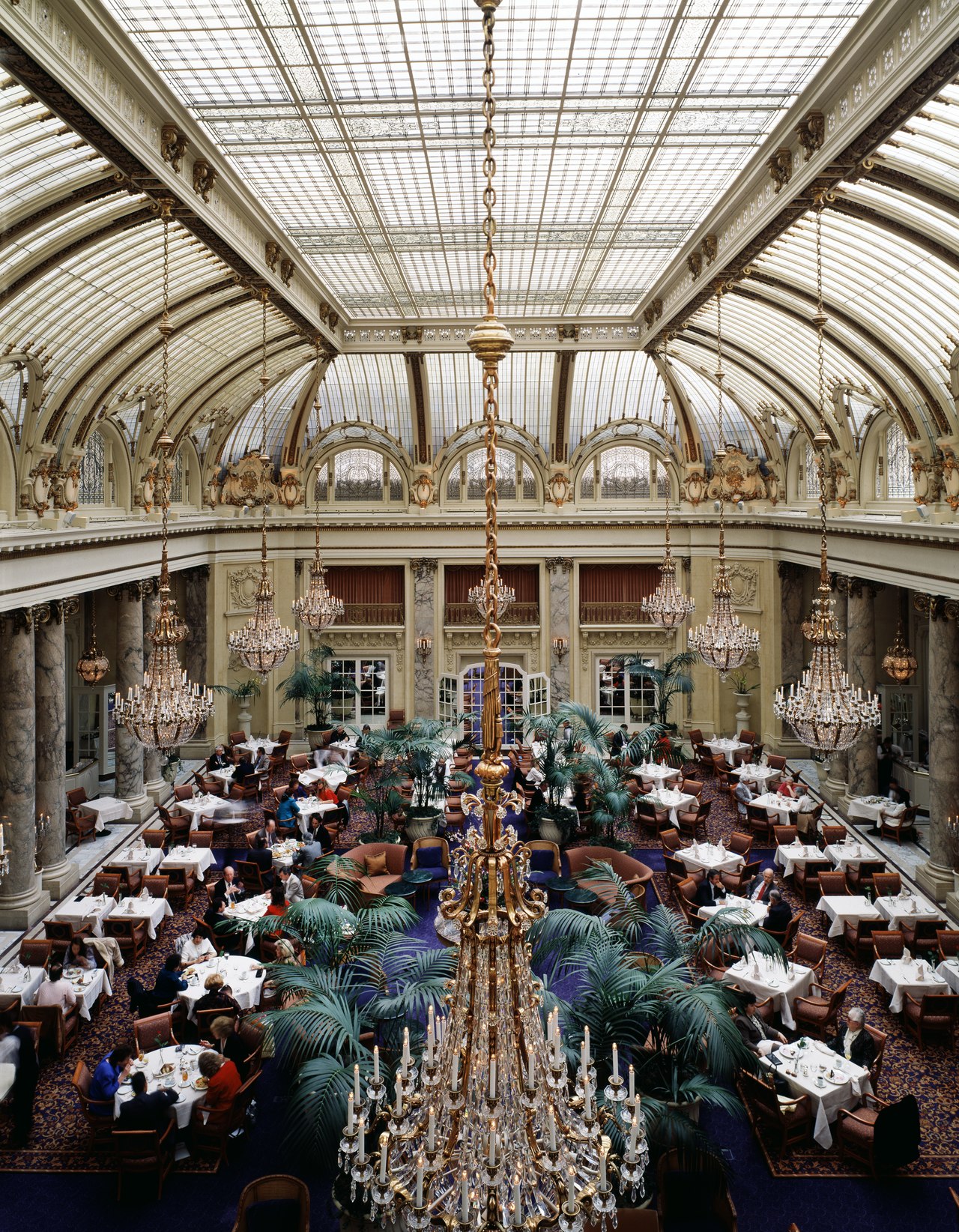
Carol M. Highsmith · Public domain
The Fae's Palace is the hidden, otherworldly seat of power for the Fae — one of the oldest and most enigmatic supernatural factions in the True Blood universe. Long concealed from humans, vampires, and other supernatural species, the palace serves as the political and ceremonial heart of Fae society, where the Fae Queen holds court and the ancient affairs of their secret kingdom are conducted. Its architecture and atmosphere blend fairy-tale grandeur with a darker, more ancient sensibility, reflecting the Fae's dual identity as both whimsical tricksters and calculating sovereigns who have watched the world from the shadows for millennia. Within the broader True Blood world, the palace functions as the Fae's territorial anchor and diplomatic hub. It is where alliances are forged, where blood is offered and debts are settled, and where the Fae project their authority over a domain that overlaps — and often clashes — with vampire territory. The palace is a constant reminder that coexistence in this world is never simple, and that the Fae, for all their playful veneer, are as territorial and ancient as any vampire lord.
- Faction
- The Fae
- Type
- Hidden palace / seat of Fae power
- Leader
- The Fae Queen
- Visibility
- Concealed from the general public and most supernatural species
- Aesthetic
- Fairy-tale grandeur with dark, ancient undertones
- Role
- Political, social, and ceremonial center of Fae life
Lore & Background
The Fae are among the oldest supernatural beings in the True Blood world, predating vampires and operating on a timescale that makes human centuries feel like a single breath. Their palace is a physical manifestation of that ancientness: a structure that seems to exist partially outside normal space, its corridors and chambers shifting in ways that suggest the building itself is alive and aware. To enter is to step into a world governed by its own logic, where hospitality is a form of power and every gesture carries the weight of centuries-old protocol. The palace is not merely a residence; it is a statement of sovereignty. The Fae use it to project authority over their territory, to receive emissaries from vampire courts and human governments, and to conduct the intricate diplomacy that keeps the fragile balance of the supernatural world intact. The Fae Queen presides from its upper chambers, and the lower halls host the social gatherings, blood-offerings, and political machinations that define Fae culture. The architecture is deliberately disorienting for outsiders — staircases that curve in unexpected directions, rooms that seem larger on the inside than the outside, gardens that bloom with flowers no botanist could name. The palace also embodies the Fae's complex relationship with the vampire world. Vampires and Fae have been rivals, uneasy allies, and something in between across the show's timeline. The palace is where those tensions come to a head: where a vampire's presence is tolerated but never truly welcome, where the Fae's superior age and power are made viscerally clear, and where the thin veneer of civility can crack to reveal ancient, territorial fury. It is a place of beauty and menace in equal measure, and every character who walks its halls learns that the Fae's rules are the only rules that matter there.
In Their Own Story
The door didn't so much open as *agree* to let her in, the wood parting with a soft exhalation like a held breath finally released. Beyond the threshold, the air tasted of honeysuckle and something older — iron, maybe, or the mineral tang of deep earth. The corridor stretched ahead, wider than the building's exterior should have allowed, its walls lined with tapestries that seemed to shift when she wasn't looking directly at them. A fountain in the far alcove ran not with water but with something dark and slow, catching the amber light of the chandeliers above. Somewhere deeper in the palace, she could hear laughter — bright, musical, and just a little too sharp at the edges. The Fae Queen's court was in session, and the air hummed with the particular electricity of ancient beings performing civility. She smoothed her dress, adjusted her grip on the glass of blood she'd been given at the gate, and walked forward. In the Fae's palace, you did not rush. You did not look away. And you absolutely, under no circumstances, accepted a second glass of anything that wasn't offered with both hands.
Reader's Guide
The Fae's Palace is best understood as a layered space, each zone reflecting a different facet of Fae power and personality. The outer gardens and entrance halls are the most welcoming areas, dripping with impossible flora — flowers that glow faintly in the dark, vines that curl around visitors with what feels like curiosity rather than threat. This is where first contacts happen, where a vampire emissary or a nervous human diplomat is met with theatrical hospitality. The Fae use this zone to establish dominance through comfort: the more at ease you feel, the more you trust, and the more vulnerable you become. It's the Fae's version of a smile that never quite reaches the eyes. The middle corridors and reception chambers are where the real business is conducted. Here the architecture grows more imposing — vaulted ceilings, stone floors worn smooth by centuries of footfall, long tables set for banquets that may last days. The Fae Queen's court gathers here, and the atmosphere shifts from playful to formal. Every seat, every glass, every whispered exchange carries political weight. Vampires who enter this zone do so as guests, not equals, and the Fae make sure they feel the distinction. The upper chambers and the Queen's private domain are the most restricted and the most unsettling. The light here is different — cooler, older, as if the sun has been filtered through something that isn't quite glass. This is where the Fae's true age shows, where the fairy-tale veneer thins and you can sense the vast, patient intelligence behind the throne. Few outsiders ever reach this level, and those who do tend to leave with a new understanding of how small their own history really is. Throughout the palace, the tension between coexistence and territorial conflict is woven into the very walls. The Fae are generous, yes, but generosity here is a form of ownership. Every kindness is a reminder of who is giving and who is receiving, and the palace makes that hierarchy inescapable.
Did You Know?
- The Fae are portrayed as older than vampires in the True Blood lore, and their palace reflects that sense of deep, layered history — the architecture feels like it has been accumulating character and secrets for millenni
- The Fae's relationship with the vampire community oscillates between rivalry and uneasy alliance across the series, and the palace is where those shifts are most dramatically staged, with the Fae's hospitality often carr
- The palace's design deliberately disorients visitors, with spatial inconsistencies and shifting details that reinforce the Fae's otherworldly nature and their control over the environment.
- Blood plays a central role in Fae culture and is featured prominently in palace scenes, serving as both a social lubricant and a symbol of the ancient bonds and debts that tie the supernatural factions together.
Gallery
Frequently Asked Questions
What is The Fae's Palace in True Blood?
It is the hidden, otherworldly headquarters of the Fae faction, functioning as their political and ceremonial hub. The Fae Queen holds court there, managing the ancient affairs of their secret kingdom away from public eyes.
Who rules from The Fae's Palace?
The Fae Queen is the sovereign power seated in the palace, presiding over Fae politics, social gatherings, and ceremonial matters. She governs the faction's internal affairs from its throne room.
What does The Fae's Palace look and feel like?
The architecture mixes fairy-tale opulence with a darker, more ancient sensibility, capturing the Fae's dual identity as playful tricksters and shrewd rulers. The overall atmosphere reads as otherworldly splendor tinged with something older and more calculating.
Who can actually see or enter The Fae's Palace?
The palace is deliberately concealed from humans, vampires, and most other supernatural beings, visible only to those the Fae choose to grant access. This long-standing secrecy has kept the Fae's inner workings hidden from the rest of the supernatural world for centuries.
Why does The Fae's Palace matter to the True Blood storyline?
It anchors the Fae as one of the oldest and most enigmatic factions in the series, giving them a physical center of authority distinct from vampire courts or human governments. The palace embodies the Fae's role as ancient, calculating sovereigns who have watched over other species from the shadows.
More in World & Setting
Elsewhere in the True Blood universe
Spotted an error? Know more?
This is a living reference — every entry is fact-audited, and reader corrections feed straight into our audit queue. Suggest an edit · See this site's audit record