
The Synod
Ancient law, ancient blood, ancient grudges — the Synod remembers everything.

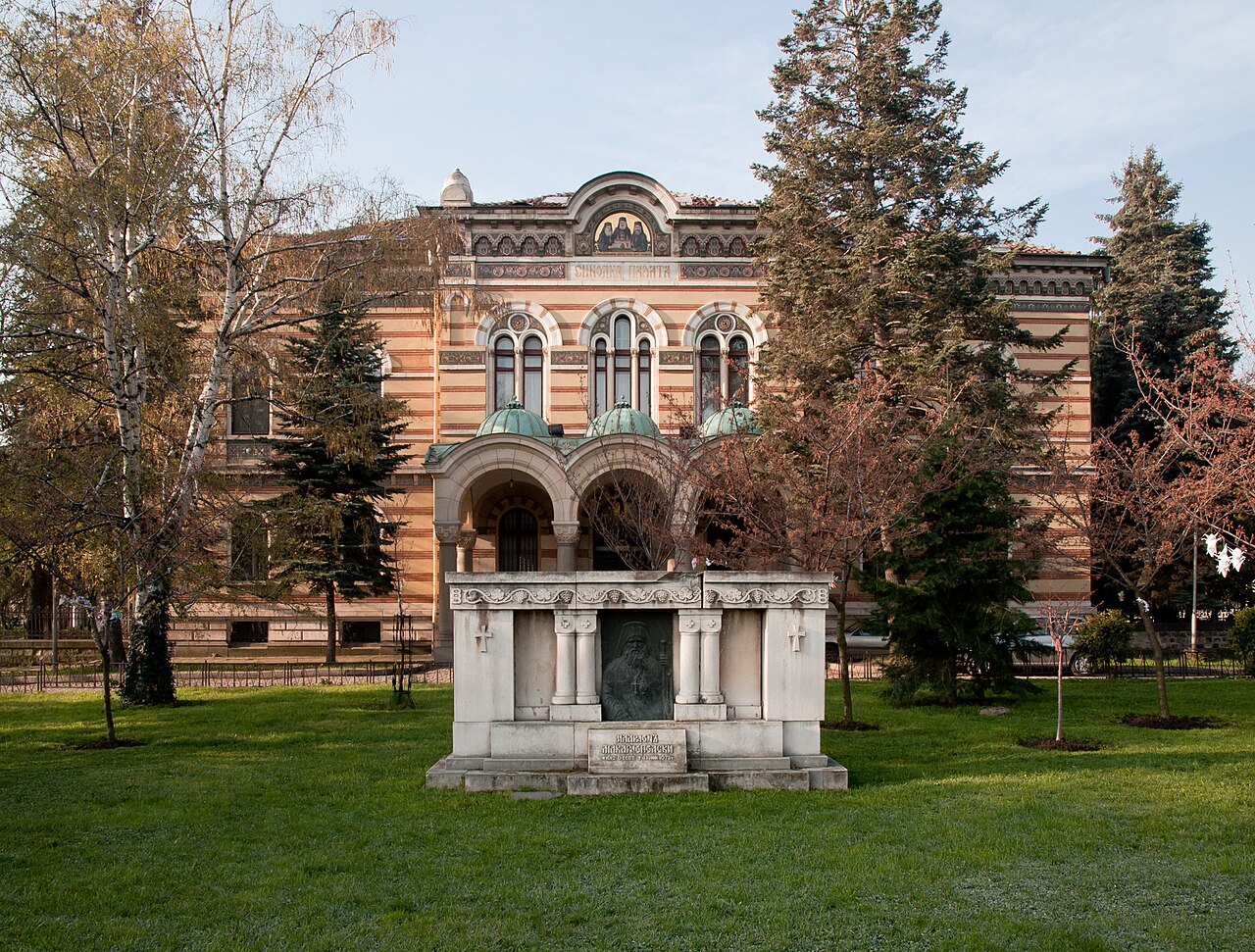
Indrek Petersoo · CC BY-SA 4.0
The Synod is the supreme governing council of vampire society in the True Blood universe, functioning as the collective authority that sets law, adjudicates disputes, and shapes the political direction of the vampire community. It occupies the same institutional role that a parliament or senate would hold in a human nation, but its members are ancient, powerful vampires whose individual lifespans stretch back centuries. Throughout the series, the Synod is the body against which all vampire politics are measured. Whether it is granting or revoking privileges, mediating between vampire factions, or responding to the seismic shift of vampires emerging into human public life, the Synod's decisions ripple outward and reshape the power dynamics of every town, every family, and every individual vampire in the story.
- Type
- Vampire governing council
- Affiliation
- Vampire society (collective)
- Role
- Highest political and judicial authority among vampires
- Composition
- Collective of senior vampires (specific membership varies by context)
- Status
- Active throughout the series
- Thematic role
- Embodiment of vampire institutional power and internal politics
Lore & Background
In the True Blood world, vampires do not simply exist as isolated predators; they maintain a structured society with laws, hierarchies, and a governing body that predates most human institutions. The Synod sits at the apex of that structure. Its members are drawn from the oldest and most politically influential vampire lineages, and its deliberations carry the weight of centuries of accumulated grievance, alliance, and betrayal. Where human governments change with elections, the Synod changes only when a member dies, is deposed, or is otherwise removed from the council — a process that, given vampire longevity, can take generations. The Synod's most consequential modern role comes in the era of the vampire 'coming out,' when vampires transition from hidden nocturnal creatures to a visible minority in human society. The council navigates this upheaval with a mixture of strategic calculation and genuine ideological division: some members see integration as survival, others as dilution. Their rulings on vampire rights, on the regulation of blood consumption, and on the relationship between vampire and human communities set the stage for nearly every political conflict the series explores. What makes the Synod particularly resonant in the True Blood mythos is its embodiment of institutional inertia. Centuries of internal vampire politics — feuds between families, territorial claims, the slow accumulation of legal precedent — mean that the Synod's decisions are rarely simple. Every vote carries the shadow of a grudge from the 1800s or a promise made in the 1600s. This deep temporal layering is what gives vampire politics in the show their distinctive weight and unpredictability.
In Their Own Story
The chamber had no windows. It never had windows. The Synod met in a room carved from a single piece of dark limestone somewhere beneath the oldest vampire territory, and the only light came from candles that never guttered, never melted, as though time itself had been politely asked to leave. Seven seats arranged in a shallow arc. Seven pairs of eyes that had watched empires rise and crumble and were, for all their age, still arguing over a territorial boundary in the Carolinas. The youngest among them had been alive when the printing press was a novelty, and even she rolled her eyes at the younger delegates' insistence that 'human rights legislation' required a response. The eldest said nothing. He rarely did. He had been sitting in that chair since before the chair was built, and he had a patience that made the centuries look like a long afternoon. The vote was not close. It was never close. That was the point.
Reader's Guide
To understand the Synod is to understand that vampire society in True Blood did not spring fully formed into the modern era. Long before the 'coming out,' vampires maintained a quiet, internal political structure — a web of family alliances, territorial understandings, and informal codes of conduct that functioned as law without legislation. The Synod crystallized from that informal order, becoming the recognized arbiter when disputes between vampire houses threatened to spill into open violence. The critical turning point in Synod history is the decision to permit vampires to live openly among humans. This was not a single vote but a slow, contested process spanning years of internal debate. Factions within the council split between those who viewed human coexistence as a strategic necessity and those who saw it as an existential threat to vampire autonomy. The Synod's eventual position — cautious, conditional, heavily regulated — became the framework within which every vampire in the series must operate. This institutional legacy explains why vampire politics in the show feel so layered and personal. A modern dispute over a blood bank, a territorial claim, or a human-vampire relationship is never just about the present issue. It is the latest chapter in a story the Synod has been writing for hundreds of years, and the council's memory is the length of its members' lives. Cause and effect in vampire governance operate on a timescale that human politics simply cannot match.
Did You Know?
- The Synod functions as the vampire equivalent of a supreme legislative and judicial body, meaning its decisions carry the force of law across all vampire territories without the need for separate enforcement mechanisms.
- Because Synod members are centuries old, a single council deliberation can reference grievances, alliances, or promises made before most modern nations existed, giving vampire politics a temporal depth that human politic
- The Synod's governance framework is what makes the vampire 'coming out' era in True Blood a political event rather than merely a social one — the entire structure of vampire law had to be renegotiated to accommodate huma
- The Synod's authority is collective rather than monarchical; no single vampire holds inherent supremacy, making internal power struggles within the council a constant undercurrent in vampire politics throughout the serie
The Saxon Exodus and the Birth of a Colony
In the early 1830s, Lutheran pastor Martin Stephan and his followers in the Kingdom of Saxony grew increasingly troubled by what they saw as the encroachment of Rationalism, Christian ecumenism, and the looming prospect of a forced merger between Lutheran and Reformed churches. The Prussian Union of 1817, which had imposed what they regarded as non-Lutheran communion and baptismal practices, only deepened their resolve. In November 1838, Stephan led between six hundred and seven hundred Saxon Lutherans across the Atlantic. Their vessels reached New Orleans between the last day of 1838 and mid-January 1839, though one ship, the Amalia, was lost at sea. The survivors quickly dispersed to Perry County, Missouri, and the St. Louis area. Stephan initially served as the colony's bishop, but accusations of corruption and sexual misconduct led to his expulsion. C. F. W. Walther assumed leadership, and a pivotal theological debate followed: whether these immigrants constituted a brand-new church or remained under the German Lutheran hierarchy. Walther's conviction that they could rightly call themselves a new church ultimately prevailed, setting the trajectory for everything that followed.
Wilhelm Löhe and the Missionary Engine
From his parish in Neuendettelsau, Bavaria, pastor Wilhelm Löhe answered what he perceived as desperate appeals from scattered German Lutheran communities in the American Midwest. Beginning in 1841, he raised funds and trained men for pastoral and teaching work, dispatching his first two students, Adam Ernst and Georg Burger, to North America in August 1842. Over the following years, Löhe sent more than eighty pastors and theology students who established and served congregations across Ohio, Michigan, and Indiana. He also spearheaded an ambitious, if largely unsuccessful, effort to found a German Lutheran settlement in Michigan that would double as a base for evangelizing Native Americans. In 1845, colonists under Pastor August Crämer arrived in Saginaw County and laid out villages—Frankenmuth, Frankenlust, Frankentrost, and Frankenhilf (today Richville)—but the missionary component faded quickly, leaving almost exclusively German communities. Perhaps Löhe's most enduring contribution was his instrumental role in founding Concordia Theological Seminary in Fort Wayne, Indiana, where he raised the necessary funds and sent eleven students plus a professor from Germany. The seminary's first president, Wilhelm Sihler, was himself a Löhe appointee. LCMS's first president, C. F. W. Walther, later called Löhe the Synod's spiritual father, crediting him, next to God, for its happy beginning and rapid growth.
Structure, Scale, and Geographic Identity
Today the Missouri Synod operates congregations in every one of the fifty U.S. states as well as in two Canadian provinces, yet more than half of its nearly 1.7 million members (the 2024 figure) remain concentrated in the Midwest, a distribution that echoes the denomination's 19th-century roots in Missouri, Ohio, and Michigan. The body is headquartered in Kirkwood, a suburb just west of St. Louis, and is administratively divided into thirty-five districts: thirty-three organized along geographic lines and two non-geographic districts, the English and the SELC. Its president, Matthew C. Harrison, has held the office since September 1, 2010. The LCMS is a member of the International Lutheran Council and maintains altar and pulpit fellowship with most of that council's member bodies. In terms of broader American religious demographics, a 2025 Pew Research Center estimate placed LCMS and evangelical-Lutheran identification at roughly 1.1 percent of U.S. adults—about 2.9 million people—compared with 2 percent, or approximately 5.2 million, who identified with the ELCA and mainline Lutheranism. This makes the Missouri Synod the second-largest Lutheran denomination in the country.
The 1847 Chicago Gathering and the Question of Identity
By 1844 and 1845, the Saxon colony, the Löhe missionaries, and the frontier minister F. C. D. Wyneken (along with his assistant F. W. Husmann) had begun serious conversations about whether a new, confessional Lutheran church body could be formed in America. The Löhe men and Wyneken's group made the consequential decision to leave their existing synods. Planning meetings took place in St. Louis in May 1846 and in Fort Wayne, Indiana, in July of that year. On April 26, 1847, twelve pastors representing fourteen German Lutheran congregations gathered in Chicago and formally organized what they called the German Evangelical Lutheran Synod of Missouri, Ohio, and Other States—a name that deliberately reflected the geographic spread of the founding congregations rather than any single region. This act of organization was not merely administrative; it was the culmination of a deeper identity struggle. The Saxon settlers had already wrestled with whether they constituted a new church or remained subordinate to the German Lutheran hierarchy, and Walther's position—that they could rightly claim independent church status—had already shaped the colony's self-understanding. The Chicago meeting gave that conviction an institutional home, binding together the Saxon, Löhe, and Wyneken traditions into a single confessional body grounded in the Book of Concord.
Gallery
Frequently Asked Questions
What is The Synod in True Blood?
The Synod is the collective ruling body of the vampire world, serving as its highest legislative and judicial authority. Think of it as the vampire equivalent of a parliament and supreme court combined into a single institution.
What powers does The Synod hold over vampires?
It establishes vampire law, settles disputes between individuals or factions, and makes broad political decisions that shape the entire vampire community. No single vampire or family outranks it in matters of governance.
Who sits on The Synod?
The council is composed of senior, ancient vampires, though the show never presents a fixed, named roster of members. Its composition appears to shift depending on the political context, reflecting a collective of the most established figures in vampire society.
How is The Synod different from a vampire family hierarchy?
While powerful vampire families wield considerable local influence, the Synod operates above those bloodline rivalries as the overarching institutional authority. It is the body that mediates between factions and enforces rules no single family can override.
Does The Synod have a dramatic arc or ending in the series?
Rather than following individual characters, the Synod functions as a persistent backdrop of institutional power that vampires appeal to or defy throughout all seasons. Its ongoing presence underscores the theme that vampire society, for all its chaos, still operates under a framework of ancient law and collective governance.
More in Lore & History
Elsewhere in the True Blood universe
Spotted an error? Know more?
This is a living reference — every entry is fact-audited, and reader corrections feed straight into our audit queue. Suggest an edit · See this site's audit record